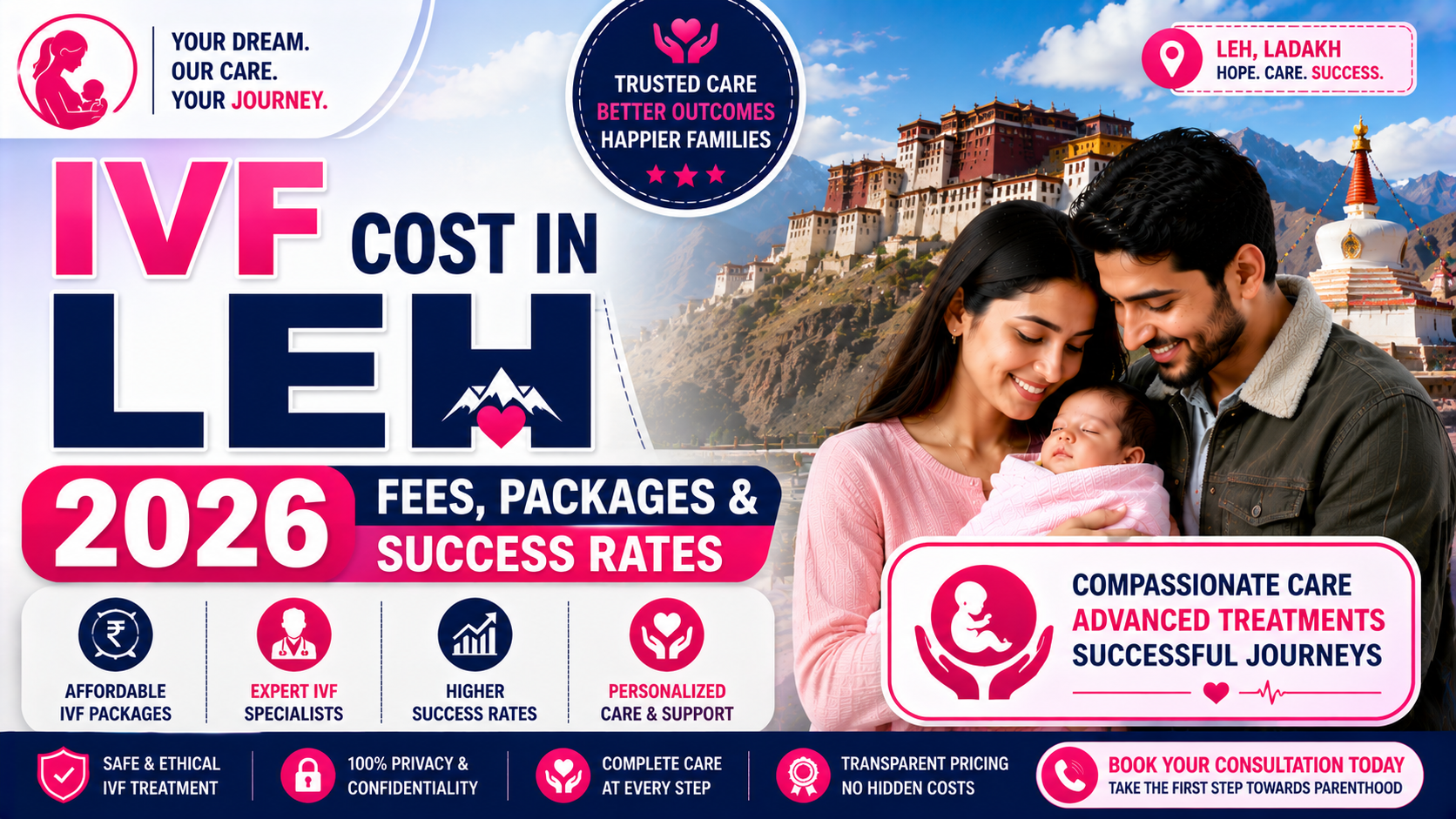
IVF Cost in Leh 2026: Fees, Packages & Success Rates
IVF Package Options and What They Include
For individuals and couples considering In Vitro Fertilisation (IVF) in Leh and the broader Ladakh region, understanding the various package options is crucial for planning. Surrogacy.net.in aims to provide clear, accurate information regarding IVF costs in Leh for 2026, including what different packages entail and the common add-ons available. The structure of an IVF package can significantly influence both the financial commitment and the overall treatment journey.
Understanding IVF Package Structures
IVF clinics typically offer several package structures designed to meet diverse patient needs and financial considerations. These range from single-attempt cycles to more comprehensive programs that share some of the financial risk with the patient.
Single-Cycle IVF Packages
A single-cycle package covers one complete round of IVF treatment, from ovarian stimulation through to embryo transfer. This option is often chosen by individuals or couples who may have a good prognosis for success or wish to assess their response to treatment before committing to multiple cycles. It includes the core procedures but requires a new financial commitment for each subsequent cycle if the first one is unsuccessful.
Multi-Cycle IVF Packages
Multi-cycle packages, sometimes referred to as 'guaranteed packages' by clinics (though not a guarantee of live birth), offer a predetermined number of IVF cycles (e.g., two or three) for a consolidated, often reduced, upfront fee compared to paying for each cycle individually. These packages are designed to provide a more cost-effective option for patients who anticipate needing more than one attempt, spreading the financial burden across multiple potential cycles. Eligibility may depend on factors such as the woman's age and ovarian reserve, as assessed by the fertility specialist.
Money-Back or Refundable IVF Packages
Money-back or refundable IVF packages represent a higher upfront investment but offer a partial or full refund if a live birth is not achieved after a specified number of IVF cycles. These packages are typically offered to patients who meet strict eligibility criteria, often related to age (e.g., under 35 years) and good ovarian reserve, as clinics bear a portion of the financial risk. It is essential to carefully review the terms and conditions of such packages, including what constitutes a 'successful outcome' (e.g., clinical pregnancy, live birth) and the exact refund percentage, as these vary significantly.
What a Standard IVF Package Covers and Common Exclusions
A standard IVF package typically includes the fundamental procedures required for an IVF cycle. However, patients should be aware of what is usually excluded, as these exclusions can add significantly to the overall cost, as further detailed in the 'IVF Cost Breakdown in Leh' section.
Standard Inclusions
- Initial Consultations: Review of medical history, fertility assessments.
- Ovarian Stimulation and Monitoring: Ultrasound scans and blood tests to track follicle growth during controlled ovarian stimulation.
- Egg Retrieval: The surgical procedure to collect eggs from the ovaries, usually performed under sedation or anaesthesia.
- Sperm Preparation: Washing and preparation of sperm for fertilisation.
- Conventional Insemination: Fertilisation of eggs with sperm in the laboratory via standard IVF methods.
- Embryo Culture: Cultivation of embryos for a specified period (typically 3–5 days).
- Embryo Transfer: The procedure to transfer selected embryos into the uterus.
Common Exclusions
Many essential or frequently needed procedures and services are often not part of a basic IVF package and incur additional charges. These commonly include:
- Medications: The full cost of ovarian stimulation drugs, which can vary widely based on individual patient response and protocol.
- Advanced Diagnostic Tests: Specialised blood tests beyond routine screenings, genetic carrier screening.
- Intracytoplasmic Sperm Injection (ICSI): A procedure used for male factor infertility or previous fertilisation failure.
- Embryo Freezing and Storage: Cost for cryopreservation of surplus embryos and annual storage fees.
- Frozen Embryo Transfer (FET): The procedure for transferring previously frozen embryos.
- Preimplantation Genetic Testing (PGT-A/SR/M): Genetic screening of embryos.
- Assisted Hatching: A laboratory technique to assist embryo implantation.
- Blastocyst Culture to Day 5/6: Extended culture beyond the standard three days.
- Donor Gametes: Costs associated with using donor eggs or donor sperm.
- Testicular Sperm Extraction (TESE/PESA): Surgical sperm retrieval procedures for men with azoospermia.
It is critical for patients to obtain a detailed, itemised cost estimate from the chosen ART clinic, clearly outlining all inclusions and exclusions, before commencing treatment. This transparency aligns with the requirements of the ART (Regulation) Act, 2021 (in force 25 Jan 2022), which mandates clear communication regarding services and charges.
Add-On Procedures: ICSI, PGT-A, Assisted Hatching, Blastocyst Culture
Beyond the standard IVF protocol, several advanced laboratory procedures, known as 'add-ons', may be recommended by fertility specialists based on specific patient circumstances. These procedures aim to improve success rates in certain situations, though their universal benefit can vary.
Intracytoplasmic Sperm Injection (ICSI)
ICSI is an advanced fertilisation technique where a single sperm is directly injected into each mature egg. It is particularly beneficial in cases of male factor infertility, such as low sperm count, poor motility, or abnormal morphology, as well as for couples with unexplained fertilisation failure in previous conventional IVF cycles. It helps bypass potential barriers to natural fertilisation.
Preimplantation Genetic Testing for Aneuploidies (PGT-A)
PGT-A involves biopsying a few cells from an embryo (usually at the blastocyst stage) and genetically screening them for chromosomal abnormalities (aneuploidies). This procedure is often recommended for women of advanced maternal age, those with a history of recurrent miscarriages, or repeated IVF failures. The goal is to identify and transfer chromosomally normal embryos, potentially increasing implantation rates and reducing the risk of miscarriage or genetic conditions in the offspring. PGT-A requires additional lab expertise and time for results.
Assisted Hatching (AH)
Assisted hatching is a micromanipulation technique performed on embryos before transfer. It involves creating a small opening in the zona pellucida (the outer shell of the embryo) to help the embryo 'hatch' out and implant into the uterine lining. This procedure may be considered for older women, embryos with a thick zona pellucida, or those who have experienced previous implantation failures. The scientific evidence supporting its routine use is still evolving, and it is not universally recommended.
Blastocyst Culture
Blastocyst culture involves growing embryos in the laboratory for an extended period, typically until day 5 or 6 after fertilisation, when they reach the blastocyst stage. This extended culture allows for better selection of the most viable embryos, as only robust embryos tend to develop to this stage. Transferring blastocysts is associated with higher implantation rates per embryo transferred due to natural selection and better synchronisation with the uterine lining. However, it can also mean fewer embryos make it to transfer, as some may arrest development during the extended culture period. The decision to proceed with blastocyst culture versus earlier embryo transfer (e.g., Day 3) is made by the embryologist and fertility specialist based on embryo quality and patient history.
Key Takeaways
- IVF package options include single-cycle, multi-cycle, and money-back structures, each with distinct cost implications and eligibility criteria.
- A standard IVF package typically covers core procedures like egg retrieval and embryo transfer but often excludes critical elements like medications, advanced lab techniques, and freezing/storage.
- Always obtain a detailed, itemised cost breakdown from your ART clinic, ensuring full transparency regarding all inclusions and exclusions.
- Common add-on procedures like ICSI, PGT-A, assisted hatching, and blastocyst culture can enhance success in specific cases but come with additional costs and should be medically justified.
- Thoroughly understand the terms of any multi-cycle or money-back package, particularly the definition of success and refund conditions.
What Factors Change Your IVF Cost in Leh?
The total cost of In Vitro Fertilisation (IVF) in Leh, or anywhere in India, is not a fixed figure but rather a dynamic estimate influenced by a range of personal medical factors, the specific treatments required, and logistical considerations. Understanding these variables is crucial for prospective parents planning their fertility journey.
Woman's Age, Ovarian Reserve, and Cycle Needs
A woman's age is a primary determinant of IVF success rates and, consequently, the overall cost. As women age, particularly beyond their mid-30s, ovarian reserve (the number and quality of eggs) typically declines. This decline often necessitates higher dosages of hormonal stimulation medications, more intensive monitoring, and a greater likelihood of requiring multiple IVF cycles to achieve a successful pregnancy.
For instance, a younger woman with good ovarian reserve might respond well to standard protocols and conceive in one or two cycles. An older woman, or one with diminished ovarian reserve, might require several cycles, each incurring significant costs for medication, procedures, and laboratory work. Each additional cycle compounds the total expenditure, making age and ovarian reserve indirect, yet powerful, cost drivers.
Specialised Procedures and Donor Options
The base IVF package typically covers standard procedures. However, many couples require additional, more specialised techniques or donor options, each adding to the overall cost:
- Intracytoplasmic Sperm Injection (ICSI): If male factor infertility is present (e.g., low sperm count or motility), ICSI is often recommended, where a single sperm is injected directly into each egg. This advanced procedure incurs an additional surcharge over conventional IVF.
- Donor Gametes (Eggs/Sperm): For individuals or couples where one or both partners cannot produce viable gametes, using donor eggs or sperm becomes necessary. The acquisition and screening of donor gametes, along with any associated medical or logistical costs, significantly increase the total budget. ⚠️ Updated Mar 2024: Under the 2024 amendment to the Surrogacy Rules (notified Mar 2024), donor gametes are now permitted in specified medical conditions, replacing the earlier blanket ban under the ART (Regulation) Act, 2021 (in force 25 Jan 2022) and ART Rules 2022.
- Frozen Embryo Transfer (FET): If multiple viable embryos are created during a fresh cycle, they can be cryopreserved for future use. A subsequent transfer of these frozen embryos (FET) involves separate costs for freezing, storage, and the transfer procedure itself.
Travel, Lodging, and Referral Costs
Given that Leh and the Ladakh region have limited advanced Assisted Reproductive Technology (ART) facilities, many couples must travel to larger cities for comprehensive IVF treatment. Common referral centres include Srinagar, Chandigarh, and Delhi. These logistical factors add a substantial layer of expense:
- Travel: Costs for flights or road travel to and from the treatment city, often requiring multiple trips for consultations, procedures, and follow-ups.
- Accommodation: Expenses for lodging in the referral city for extended periods, which can range from several days to weeks depending on the treatment stage.
- Local Transport and Living: Daily commuting, food, and other living expenses incurred while away from home.
- Leave from Work: Potential loss of income or the need for extended leave can also be an indirect financial strain.
These non-medical expenses can often rival or even exceed the cost of the medical procedure itself, particularly for couples undertaking multiple cycles or requiring prolonged stays.
How Success Rates Affect Total Expenditure
The probability of achieving a successful live birth per IVF cycle directly impacts the overall financial investment. Lower success rates, often associated with advanced maternal age, diminished ovarian reserve, or complex medical conditions, mean a higher likelihood of needing multiple IVF cycles. Each additional cycle adds significant costs for medication, laboratory procedures, and clinical fees.
Factors such as the expertise and technology of the chosen clinic (especially if travelling to a referral clinic), and even environmental factors like high altitude, can influence these outcomes. While the base cost of a single cycle might seem manageable, the cumulative cost of repeated attempts due to lower success rates can quickly escalate. For a detailed breakdown of success rates and realistic expectations, please refer to the specific IVF cost considerations in other hilly regions.
IVF Live-Birth Success Rates by Age (Indicative)
| Age Band | Approx. Live-Birth Rate (per embryo transfer) | Notes |
|---|---|---|
| Under 35 | 35–40% | Generally highest success rates with own eggs. |
| 35–37 years | 25–30% | Gradual decline in egg quality and quantity begins. |
| 38–40 years | 15–20% | More pronounced decline; higher chance of needing multiple cycles. |
| Over 40 years | 5–10% | Significantly lower rates; donor eggs often recommended for higher chances. |
Source: General national trends based on medical consensus and ICMR guidelines (e.g., ICMR National ART Guidelines, 2017), indicative and subject to individual variability and clinic-specific factors. Accessed July 2026.
Key Takeaways
- IVF costs in Leh are highly variable, influenced by medical necessity and logistical realities.
- Woman's age and ovarian reserve directly impact medication needs and the number of cycles, driving costs.
- Advanced procedures like ICSI or the use of donor gametes add significant surcharges to the base cost.
- Travel and lodging expenses for treatment outside Leh can substantially increase the total financial burden.
- Success rates directly affect total expenditure, as lower rates often necessitate multiple, costly cycles.
Donor, Frozen Transfer and Advanced IVF Add-On Costs
Beyond the core IVF cycle, several advanced procedures and donor options can significantly impact the overall treatment cost. These add-ons are often recommended based on individual medical profiles and specific infertility challenges. Understanding their purpose and associated expenses is crucial for couples planning their fertility journey in places like Leh, where specialised services may involve additional logistical considerations.
Donor Gametes and Embryo Donation Cost Ranges
For couples facing specific medical conditions that preclude the use of their own gametes, donor options become a viable path to parenthood. The ART (Regulation) Act, 2021, and ART Rules, 2022, govern the use of donor gametes in India, ensuring rigorous screening, consent, and anonymity protocols. ⚠️ Updated March 2024: The 2024 amendment to the Surrogacy Rules clarified that donor gametes are permitted in specified medical conditions for altruistic surrogacy, a principle that also guides their use in IVF treatments where medically indicated. (Source: Ministry of Health and Family Welfare, Govt. of India).
- Donor Sperm: The cost for donor sperm is generally lower compared to donor eggs, as it primarily covers the sourcing from a registered sperm bank, donor screening, and initial freezing and storage. This typically ranges from approximately ₹10,000 to ₹30,000 per sample.
- Donor Egg: A donor egg cycle is substantially more expensive because it involves a medical procedure for the donor, including hormonal stimulation, monitoring, and egg retrieval, in addition to extensive medical and genetic screening. The indicative cost for a donor egg package, which includes donor compensation (as permitted by law for medical expenses/insurance), donor screening, and retrieval, can range from ₹1,00,000 to ₹2,50,000 or higher. This does not include the IVF cycle fees for the recipient.
- Embryo Donation: When both donor sperm and donor eggs are used to create embryos for transfer, it is known as embryo donation. The costs will reflect the combined expenses of both donor gametes plus the embryology lab work for creating the embryos. This can be broadly comparable to or slightly higher than a donor egg cycle, typically ranging from ₹1,50,000 to ₹3,00,000, exclusive of the transfer procedure itself.
These figures are estimated and can vary based on the specific ART bank, donor profiles, and regional operational costs, including logistical challenges in remote areas like Leh.
Frozen Embryo Transfer (FET) and Storage Fees
After an initial IVF cycle, any high-quality embryos that are not transferred immediately can be cryopreserved (frozen) for future use. This allows for subsequent attempts without undergoing another full stimulation and egg retrieval cycle.
- Frozen Embryo Transfer (FET): A separate procedure, FET involves thawing the cryopreserved embryos and transferring them into the uterus. The preparation for FET is less intensive than a fresh cycle, typically involving endometrial preparation through medication. The estimated cost for an FET cycle in India generally ranges from ₹30,000 to ₹60,000, which includes thawing, preparation, and the transfer procedure.
- Embryo Storage: Cryopreservation requires annual storage fees to maintain the embryos safely in liquid nitrogen. These fees are recurring and vary by clinic and duration. An indicative annual storage fee typically ranges from ₹10,000 to ₹25,000. The ART (Regulation) Act, 2021, specifies rules regarding the duration of storage and the consent required from the intending couple.
When PGT-A and Other Add-Ons Are Worth the Extra Spend
Advanced diagnostic and embryology techniques, often referred to as 'add-ons', aim to improve the chances of a successful pregnancy. However, they incur additional costs and are typically recommended in specific clinical scenarios.
Preimplantation Genetic Testing for Aneuploidy (PGT-A)
PGT-A is a genetic test performed on embryos created during an IVF cycle before they are transferred to the uterus. It involves taking a small biopsy from the embryo's outer layer (trophectoderm) and analysing it for chromosomal abnormalities (aneuploidy). This testing aims to identify embryos with the correct number of chromosomes, potentially increasing implantation rates and reducing the risk of miscarriage.
PGT-A is generally considered in situations such as:
- Advanced Maternal Age: Women aged 35 or older, as the risk of aneuploidy increases significantly with age.
- Recurrent Miscarriages: Couples with a history of two or more miscarriages.
- Repeated IVF Failures: After multiple unsuccessful IVF cycles with good quality embryos.
- Severe Male Factor Infertility: In cases where sperm quality is significantly compromised.
- Previous Pregnancy with Aneuploidy: If there's a history of a pregnancy affected by a chromosomal abnormality.
The cost for PGT-A is significant, often charged per embryo or as a batch fee, and typically ranges from ₹50,000 to ₹1,00,000 per cycle, plus the cost of biopsy and shipping if the testing is done off-site. While it can improve outcomes for certain patient groups, it is not universally recommended and should be discussed thoroughly with a fertility specialist to weigh its benefits against the costs and potential risks.
Other Advanced IVF Add-Ons
Other procedures that may be recommended include:
- Assisted Hatching (AH): A technique where a small opening is made in the outer shell (zona pellucida) of the embryo just before transfer. This is believed to assist the embryo in hatching out and implanting into the uterine wall. It is typically considered for older women, embryos with a thickened zona, or after previous IVF failures. The cost is usually in the range of ₹10,000 to ₹25,000.
- Blastocyst Culture and Transfer: Growing embryos in the laboratory for 5-6 days until they reach the blastocyst stage allows for better selection of viable embryos for transfer. While often part of standard protocol, some clinics may list it as an add-on or a premium option if not included in a basic package. This typically adds ₹15,000 to ₹30,000 to the cycle cost.
It is important for couples to inquire about all potential add-on costs upfront and understand the medical rationale for each recommendation to make informed decisions about their IVF treatment plan.
Key Takeaways
- Donor gametes (sperm, egg) and embryo donation significantly increase IVF costs due to donor sourcing, screening, and associated medical procedures.
- Frozen Embryo Transfer (FET) is a less expensive option for subsequent attempts using previously cryopreserved embryos, with additional annual fees for embryo storage.
- Advanced add-ons like PGT-A are expensive but may be beneficial for specific patient groups, such as those with advanced maternal age or recurrent IVF failures, to improve success rates.
- Always discuss the medical necessity and estimated costs of any recommended add-on procedures with your fertility specialist.
- Costs for donor options and add-ons in Leh may reflect broader Indian ranges, potentially with additional logistical considerations for specialised services not available locally.
Is IVF Covered by Insurance or Government Schemes in India?
The financial aspect of In Vitro Fertilisation (IVF) treatment is a significant concern for many couples, including those in Leh and the wider Ladakh region. Understanding whether IVF costs are covered by health insurance or government schemes in India requires a clear look at current policies and available financial avenues.
Current Insurance Stance on IVF/ART Treatment in 2026
As of 2026, the landscape for insurance coverage of IVF and Assisted Reproductive Technology (ART) treatments in India remains largely defined by specific policy terms. Traditionally, most standard health insurance plans in India have not covered fertility treatments, often categorising them as elective procedures rather than medically necessary interventions for life-threatening conditions. This position means that the primary cost of an IVF cycle, including medication, egg retrieval, fertilisation, and embryo transfer, typically falls outside the scope of general health insurance.
However, the scenario is gradually evolving. Some newer, specialised health insurance products or riders may offer partial coverage for specific aspects of fertility treatment. This might include diagnostic tests to identify the cause of infertility, or treatment for underlying medical conditions (such as Polycystic Ovarian Syndrome or endometriosis) that contribute to infertility. Full coverage for the entire IVF procedure remains rare. It is crucial for intending couples to meticulously review their policy documents and directly consult their insurance providers to understand what, if anything, is covered.
It is important to distinguish between coverage for intending parents and for donors/surrogates. The ART (Regulation) Act, 2021 (in force 25 Jan 2022) mandates that intending couples must provide insurance coverage for the oocyte donor and the surrogate mother for a specified period. This legal requirement, however, does not extend to covering the IVF treatment costs for the intending couple themselves. The ART (Regulation) Act, 2021 (accessed July 2026) aims to regulate ART clinics and banks, ensure ethical practices, and protect the interests of all parties involved.
EMI, Financing, and Cost-Saving Options for Ladakh Couples
Given the limited insurance coverage, many couples explore alternative financing and cost-saving strategies to manage IVF expenses. For couples in Ladakh, who often need to travel for advanced fertility care, these options become even more vital:
- Equated Monthly Installments (EMIs): Many private IVF clinics across major Indian cities and financial institutions offer EMI facilities, allowing patients to convert the total treatment cost into manageable monthly payments. This helps spread the financial burden over a longer period, typically with varying interest rates depending on the provider and tenure.
- Medical Loans: Several banks and Non-Banking Financial Companies (NBFCs) provide personal loans or specific medical loans tailored for healthcare expenses, including fertility treatments. Eligibility for these loans usually depends on credit scores, income stability, and other financial criteria.
- Clinic Packages: As discussed in the "IVF Package Options and What They Include" section, many clinics offer multi-cycle packages or even "guaranteed refund" programs. While these often have higher upfront costs, they can potentially reduce the per-cycle expense or provide a financial safety net in case of unsuccessful attempts.
- Strategic Travel Planning: For Ladakh couples travelling to cities like Chandigarh, Delhi, or Srinagar for treatment, optimising travel and accommodation costs is crucial. This can involve consolidating appointments to minimise trips, choosing economical lodging options, or seeking clinics that offer assistance with travel logistics.
- Medication Management: The cost of fertility medications can be substantial. Discussing generic alternatives with your fertility specialist, where medically appropriate, or exploring potential discounts for bulk purchases (if permitted by the clinic and pharmacy) can help manage this expense.
Exploring these financial avenues thoroughly can help make IVF treatment more accessible and less burdensome for couples. Understanding the IVF cost in Shimla, another hill-state region, can provide comparative insights into travel-related considerations.
Ladakh UT Public Health Facility Limits for Fertility Care
The Union Territory of Ladakh, despite its recent administrative changes, still faces significant limitations in providing advanced fertility care through its public health infrastructure. As of 2026, government hospitals and primary health centres in Leh and Kargil are primarily equipped to offer foundational reproductive health services.
These facilities typically provide:
- Basic gynaecological consultations and women's health check-ups.
- Initial investigations for infertility, such as hormonal assays and basic semen analysis.
- Counselling and referral services for couples diagnosed with infertility.
However, complex Assisted Reproductive Technologies like IVF, Intracytoplasmic Sperm Injection (ICSI), or advanced diagnostic procedures (e.g., Preimplantation Genetic Testing) require highly specialised laboratories, equipment, and a team of dedicated embryologists and fertility specialists. Such comprehensive ART services are generally unavailable in public health facilities within Ladakh.
Consequently, couples in Ladakh requiring IVF treatment are routinely referred to larger, well-equipped medical centres in other states or Union Territories. Popular referral destinations include advanced public institutions like the Post Graduate Institute of Medical Education and Research (PGIMER) in Chandigarh, or numerous private IVF clinics in Delhi, Chandigarh, or Srinagar. This referral system, while ensuring access to necessary care, inevitably increases the overall treatment cost due to associated travel, accommodation, and repeated visit expenses. While some national health schemes like Ayushman Bharat Pradhan Mantri Jan Arogya Yojana (PM-JAY) provide cashless healthcare for various ailments, direct coverage for IVF treatment under these schemes is not standard, and couples should confirm eligibility and coverage details with the scheme's authorities or their local health department in Ladakh.
For additional perspective on regional variations in IVF accessibility, reviewing information on IVF cost in Gangtok, another Himalayan region, can be useful.
Key Takeaways
- Most standard health insurance policies in India do not cover the full cost of IVF treatment, often classifying it as an elective procedure.
- The ART (Regulation) Act, 2021 mandates insurance for oocyte donors and surrogates, but not for the intending couple's IVF cycle costs.
- Couples in Ladakh can explore financial options like EMIs, medical loans, and clinic-specific multi-cycle packages to manage expenses.
- Strategic planning for travel and accommodation, and careful medication management, are crucial cost-saving strategies for those travelling outside Ladakh for treatment.
- Advanced IVF services are generally not available in Ladakh's public health facilities, necessitating referrals to major cities and incurring additional travel costs.
Cost of Travelling Outside Leh for IVF Treatment
For individuals and couples in Leh seeking advanced fertility treatments like In Vitro Fertilisation (IVF), the limited availability of specialised Assisted Reproductive Technology (ART) centres locally often necessitates travel to larger cities. This decision involves not only the financial aspect of the treatment itself but also significant additional costs related to travel, accommodation, and repeat visits. Understanding these combined expenses and logistical challenges is crucial for comprehensive financial and treatment planning.
Accessing Advanced ART Centres Beyond Leh
Leh, given its remote location and high-altitude geography, has a nascent ART infrastructure. Consequently, for comprehensive IVF services, many intending parents often look towards established medical hubs in Northern India. The most frequently considered cities for advanced ART treatment include:
- Srinagar: As the nearest major city, Srinagar offers a range of medical facilities, including some ART centres. Its proximity can make it a more accessible option, though the range of advanced services might be less extensive than in larger metropolitan areas.
- Chandigarh: Known for its well-developed healthcare infrastructure, Chandigarh hosts numerous reputable IVF clinics and hospitals. It serves as a regional medical hub, offering modern facilities and experienced specialists.
- Delhi: India's capital is a major destination for medical tourism and fertility treatment, boasting a high concentration of advanced ART clinics, state-of-the-art laboratories, and a wide array of specialist services, including complex IVF procedures and access to various donor programmes.
These centres are typically registered under the ART (Regulation) Act, 2021, ensuring adherence to national standards for fertility treatments and patient safety. For those exploring alternatives in similar geographical contexts, understanding IVF costs in cities like Shimla can provide a comparable perspective on regional challenges and solutions.
Budgeting for IVF Treatment and Travel Combined
When planning for IVF outside Leh, the overall budget must encompass more than just the treatment fees. The combined costs can be substantial and include:
- Core IVF Treatment Cost: While discussed in detail in earlier sections, this remains the primary expense. Clinics in Srinagar, Chandigarh, or Delhi may have different pricing structures compared to any nascent local options, but generally offer comprehensive packages for a single IVF cycle, often ranging from ₹1,50,000 to ₹3,50,000 or more, depending on inclusions and required add-ons.
- Flights: Return airfare for both partners is a recurring expense, as an IVF cycle typically involves multiple visits for consultations, scans, egg retrieval, and embryo transfer. Depending on the season and booking time, flights from Leh can range from ₹10,000 to ₹25,000 per person per round trip to cities like Delhi or Chandigarh.
- Accommodation: Patients often need to stay in the chosen city for extended periods, sometimes for several weeks, especially during the stimulation and monitoring phases, and around egg retrieval and embryo transfer. Daily accommodation costs (hotels, guesthouses, or serviced apartments) can range significantly, from ₹2,000 to ₹8,000 per night, accumulating to a substantial sum over a typical 2–4 week stay.
- Local Transportation: Commuting between accommodation and the clinic, as well as airport transfers, adds to the daily expenditure. This can involve taxis, ride-sharing services, or public transport.
- Food and Incidentals: Daily living expenses for meals, personal care, and unforeseen needs should also be factored in.
- Repeat Visits and Cycles: It is important to anticipate that a single IVF cycle might not be successful, necessitating repeat visits or additional cycles. Each additional cycle or follow-up visit will incur further travel and accommodation costs, potentially multiplying the overall expense.
Therefore, a realistic combined budget could easily exceed ₹5,00,000 for a single IVF cycle when factoring in all travel and living expenses, especially if multiple trips are required or if the treatment extends over several weeks. This figure can increase significantly with advanced procedures or multiple cycles.
Navigating Leh's Seasonal Air Connectivity
Leh's connectivity, primarily via air, is subject to significant seasonal variations. This poses a unique challenge for individuals planning time-sensitive medical procedures like IVF:
- Winter Challenges: During winter months (roughly October to March), heavy snowfall can lead to frequent flight delays or cancellations at Leh's Kushok Bakula Rimpochee Airport. This can disrupt meticulously planned IVF treatment schedules, which require precise timing for medication administration, monitoring, and procedures.
- Limited Road Access: Major road arteries connecting Leh to other parts of India (e.g., Manali-Leh Highway, Srinagar-Leh Highway) are also closed for much of the winter due to snow, making air travel the only viable option.
- Booking and Flexibility: Patients are advised to book flights well in advance, especially during peak travel seasons, and consider flexible tickets to accommodate potential delays. Building in extra buffer time around critical treatment dates is essential to avoid missing appointments.
- Contingency Planning: Financial contingency for unforeseen extended stays due to weather or treatment complications is also advisable.
Careful consideration of Leh's unique climate and transportation challenges is paramount for a smooth and successful IVF journey when seeking treatment outside the region.
Key Takeaways
- Advanced ART services often require travel from Leh to cities like Srinagar, Chandigarh, or Delhi, which have more developed fertility infrastructures.
- The overall budget for IVF treatment outside Leh must account for core treatment fees, flights, accommodation for multiple visits, local transport, and daily living expenses.
- A single IVF cycle with travel can easily lead to a combined expenditure exceeding ₹5,00,000, which increases with additional cycles or advanced add-ons.
- Leh's seasonal air connectivity, especially in winter, demands meticulous planning, buffer time, and financial contingencies to manage potential travel disruptions and ensure treatment continuity.
Frequently Asked Questions
What is the estimated cost of an IVF cycle in Leh in 2026?
What does a standard IVF package in Leh typically include?
What factors can increase the total IVF cost in Leh?
Are donor gametes permitted for IVF treatment in India as of 2026?
⚠️ 2024 Surrogacy Rules amendment (Mar 2024) now permits donor gametes in specified medical conditions.
Source: Surrogacy (Regulation) Rules, 2022 (Amendment 2024) (In force 14 March 2024)
What is the estimated cost of using donor eggs or sperm for IVF in India?
How do frozen embryo transfer (FET) costs compare to fresh IVF cycles in India?
Is IVF treatment covered by health insurance or government schemes in India?
What are the eligibility criteria for couples seeking IVF in India?
Source: Assisted Reproductive Technology (Regulation) Act, 2021 — India Code (Enforced 25 January 2022)
How can I verify if an IVF clinic in Leh is legally registered in India?
Source: National ART & Surrogacy Registry (Continuously updated)
What are the success rates of IVF in India, and how do they vary by age?
Source: Indian Council of Medical Research (ICMR) National Guidelines (2017 (latest comprehensive guidelines on success rates))