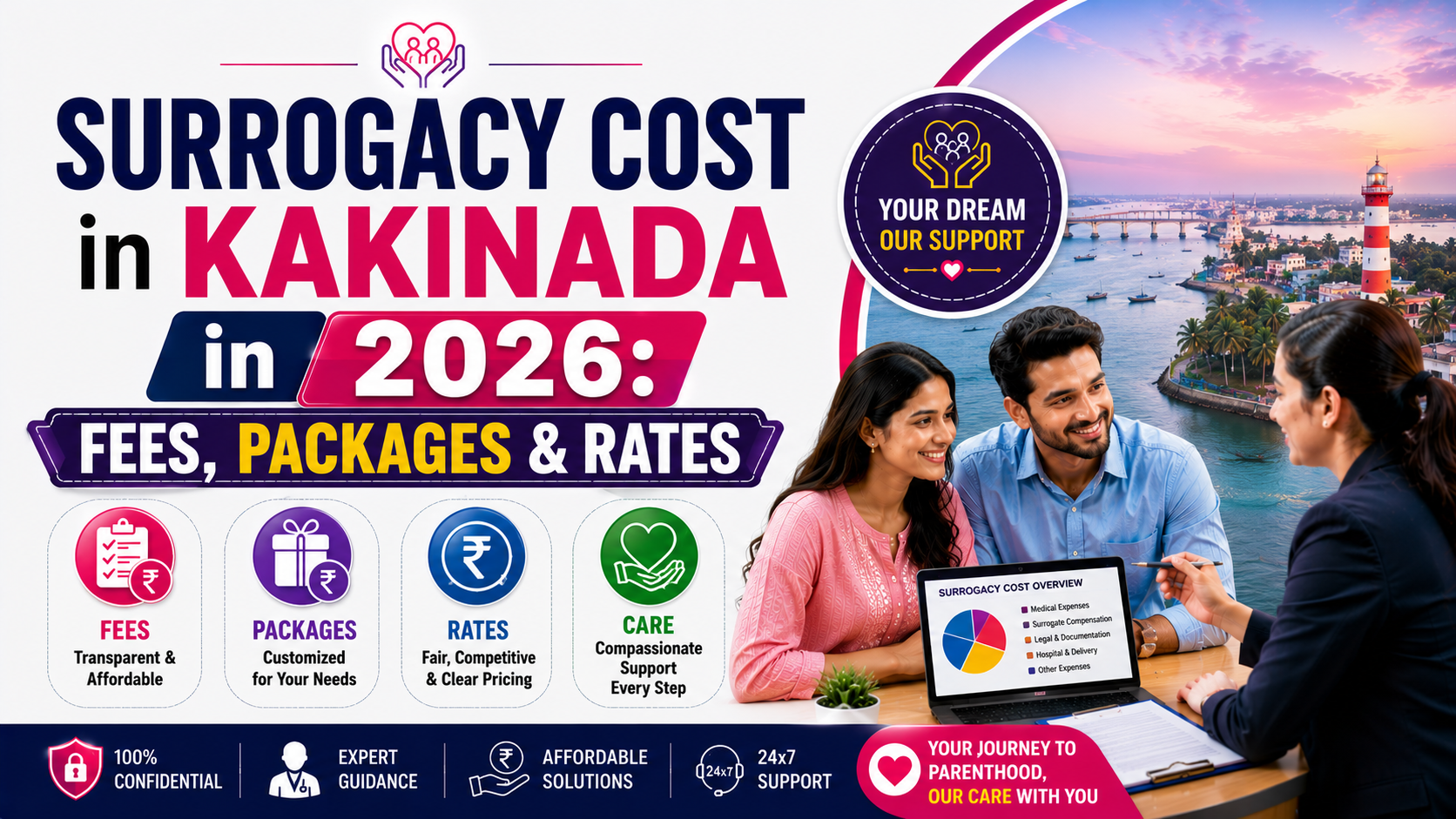
Surrogacy Cost in Kakinada in 2026: Fees, Packages & Rates
For intending couples seeking a surrogacy journey in Kakinada in 2026, the estimated total cost for an altruistic surrogacy process typically ranges from approximately ₹15,00,000 to ₹25,00,000. This figure reflects the comprehensive medical, legal, and support services required under the Surrogacy (Regulation) Act, 2021. It's crucial to understand that this is an indicative range, as individual medical needs and specific circumstances can influence the final expenses.
Embarking on a surrogacy journey is a profound decision for many intending parents, and understanding the financial aspects is a primary concern. The blog post "Surrogacy Cost in Kakinada in 2026: Fees, Packages & Rates" on Surrogacy.net.in aims to provide clarity on the various components that contribute to the overall cost in Kakinada. It's important to note that commercial surrogacy is strictly prohibited in India under the Surrogacy (Regulation) Act, 2021 (in force 25 January 2022), making altruistic surrogacy the only legal pathway. Therefore, the costs primarily cover medical procedures, legal processes, and the care and insurance for the surrogate mother, rather than any direct payment for the surrogacy itself.
Estimated Cost Range for Surrogacy in Kakinada (2026)
The total cost for an altruistic surrogacy journey in Kakinada in 2026, as per prevailing estimates for the Indian context, generally falls within the range of ₹15,00,000 to ₹25,00,000. This estimate is comprehensive, encompassing the entire process from initial medical evaluations through to the child's birth and legal formalities. These figures are indicative and can fluctuate based on specific medical requirements, the number of IVF cycles needed, and any potential complications.
The Surrogacy (Regulation) Act, 2021, and the ART (Regulation) Act, 2021, govern all aspects of assisted reproductive technology and surrogacy in India. These laws mandate transparent pricing and outline the permissible expenses, focusing on the medical and well-being aspects of the surrogate mother, rather than commercial considerations. Costs are primarily driven by the advanced medical procedures involved, such as In Vitro Fertilization (IVF), embryo transfer, and comprehensive antenatal and postnatal care.
Kakinada Compared to Larger Cities: Cost Implications
When considering surrogacy costs, potential parents often compare smaller cities like Kakinada with larger metropolitan areas such as Hyderabad, Vijayawada, or Visakhapatnam. While Kakinada might offer slightly lower overheads for certain non-medical services like accommodation or local travel, the core medical, legal, and surrogate care costs tend to be relatively consistent across different cities in Andhra Pradesh and indeed, across India. This consistency stems from several factors:
- Standardized Medical Protocols: All registered ART clinics, regardless of location, must adhere to the same national guidelines and standards set by the ART (Regulation) Act, 2021, and the Indian Council of Medical Research (ICMR). This ensures a baseline quality of medical care and associated costs.
- Legal Framework: The Surrogacy (Regulation) Act, 2021, applies uniformly across the country. Legal fees for drafting agreements, obtaining court orders, and securing parentage certificates do not vary significantly between cities based purely on size.
- Surrogate Compensation Structure: Under altruistic surrogacy, the surrogate mother receives no monetary compensation beyond her medical expenses, insurance, and specific allowances for nutrition and health support during pregnancy. These expenses are broadly similar across regions. The Act mandates a 36-month general health insurance cover for the surrogate, the cost of which is also standardized.
Therefore, while minor differences might exist, Kakinada's overall surrogacy cost profile is generally comparable to that of other cities within the state for the essential components of a legally compliant altruistic surrogacy journey. Differences are more likely to arise from the specific clinic's pricing structure, the expertise of the medical team, and the comprehensiveness of their package, rather than solely the city's size.
What the Quoted Figure Typically Includes and Excludes
The estimated total cost for altruistic surrogacy in Kakinada is designed to be comprehensive, yet it is vital for intending parents to understand what exactly is covered and what might incur additional charges. Transparency in pricing is a cornerstone of ethical surrogacy, as mandated by the ART and Surrogacy Acts.
Typical Inclusions:
- IVF Cycle & Embryo Transfer: Costs associated with the intending mother's (or donor's) ovarian stimulation, egg retrieval, fertilization, and embryo transfer to the surrogate. This also includes embryo freezing and storage for a defined period.
- Medical Screening: Comprehensive medical and psychological screening for both the intending parents and the surrogate mother, as required by law.
- Legal Formalities: Expenses for legal counsel, drafting of the surrogacy agreement, obtaining the essentiality and eligibility certificates from the District Medical Board and District Collector, and securing the parentage order from the competent court.
- Surrogate Mother's Care: This covers all antenatal care, regular medical check-ups, necessary medications, hospital charges for delivery, and post-delivery care for the surrogate. It also includes allowances for nutrition and wellbeing during the pregnancy.
- Mandatory Insurance: The cost of the mandated 36-month general health insurance policy for the surrogate mother.
- Clinic & Agency Fees: Administrative and coordination fees charged by the registered ART clinic and any associated surrogacy agency facilitating the process.
⚠️ UPDATE (March 2024): Under the 2024 amendment to the Surrogacy Rules (notified Mar 2024), donor gametes are now permitted in specified medical conditions. This replaces the earlier blanket ban, offering more options for intending parents where medically necessary.
Common Exclusions (Potential Additional Costs):
- Donor Gametes: If donor eggs or sperm are required (permitted under specific medical conditions as per the 2024 amendment), there will be additional costs associated with donor screening, compensation to the donor (as per ART Act guidelines), and their IVF cycle.
- Multiple IVF Attempts: The initial quoted figure typically covers one or a limited number of IVF and embryo transfer attempts. If multiple attempts are needed to achieve a successful pregnancy, additional costs will be incurred.
- Complications: Unforeseen medical complications for either the surrogate or the baby, requiring extended hospital stays (e.g., NICU charges), specialized treatments, or additional medical interventions, are generally not included in the standard package.
- Legal Challenges: Any unforeseen legal challenges or additional legal services beyond the standard process might incur extra fees.
- Travel & Accommodation: Expenses for intending parents' travel, accommodation, and stay in Kakinada during various stages of the process, particularly around the time of embryo transfer and birth, are usually excluded.
It is crucial for intending parents to request a detailed cost breakdown from registered ART clinics and to clarify all inclusions and exclusions before committing to a surrogacy arrangement. For further details on navigating the financial aspects, consider reading about surrogacy costs in Nellore or surrogacy costs in Tirupati, which share similar frameworks within Andhra Pradesh.
Key Takeaways
- The estimated cost for an altruistic surrogacy journey in Kakinada in 2026 is broadly ₹15,00,000 to ₹25,00,000, encompassing medical, legal, and surrogate care.
- Commercial surrogacy is illegal in India; all costs are for altruistic surrogacy as per the Surrogacy (Regulation) Act, 2021.
- Kakinada's surrogacy costs are generally comparable to larger cities like Hyderabad or Vijayawada due to standardized medical and legal frameworks.
- The quoted figure typically includes IVF, medical screening, legal fees, surrogate's care and mandatory insurance, but excludes donor gametes (if additional), repeat IVF attempts, or complications.
- Always request a detailed cost breakdown from a registered ART clinic to understand all inclusions and potential exclusions.
- The 2024 amendment to Surrogacy Rules permits donor gametes in specified medical conditions, impacting cost if needed.
Full Surrogacy Cost Breakdown in Kakinada (2026)
Understanding the total cost of an altruistic surrogacy journey in Kakinada involves a detailed breakdown of various components. Under the Surrogacy (Regulation) Act, 2021 (in force 25 Jan 2022) and the Surrogacy Rules, 2022, commercial surrogacy is prohibited in India. This means all costs are related to medical procedures, essential support for the surrogate, and legal/administrative services, rather than any direct payment to the surrogate mother beyond her medical expenses and insurance.
The overall expense is influenced by factors such as the number of IVF cycles required, the need for donor gametes, and any medical complications. Below is an estimated breakdown of the primary cost categories for a surrogacy journey in Kakinada for 2026.
| Item | Estimated Range (₹) | Notes |
|---|---|---|
| ART Procedures (IVF, Embryo Transfer) | ₹1,50,000 – ₹3,00,000 | Includes medication, monitoring, egg retrieval, embryo transfer. Costs may increase if multiple IVF cycles or transfers are needed. |
| Donor Gamete Charges (if required) | ₹40,000 – ₹80,000 | Cost for sourcing, screening, and management of donor eggs or sperm by a registered ART bank. This is not compensation to the donor. ⚠️ Updated: Donor gametes are permitted in specific medical conditions as per the 2024 amendment to the Surrogacy Rules (notified Mar 2024). |
| Surrogate Mother's Medical Expenses & Support | ₹4,00,000 – ₹7,00,000 | Covers comprehensive antenatal, delivery, and postnatal medical care, nutrition, medication, and local transportation for the surrogate, as mandated by the Act. |
| Surrogate Health Insurance (36 months) | ₹50,000 – ₹1,50,000 | Mandatory as per the Surrogacy Act, 2021, covering the surrogate for 36 months post-delivery for any health complications arising from the pregnancy. Varies by insurance provider. |
| Medical & Psychological Screening (All Parties) | ₹60,000 – ₹1,20,000 | Includes initial diagnostic tests for intending parents, genetic screening, infectious disease panel, and psychological evaluation for the surrogate mother. |
| Legal & Administrative Fees | ₹1,00,000 – ₹2,00,000 | For drafting and registering the surrogacy agreement, obtaining the court order for parentage, eligibility certificates, and legal counsel throughout the process. |
| ART Clinic & Surrogacy Agency Coordination Fees | ₹2,00,000 – ₹4,00,000 | Service charges for case management, counselling, logistical support, and overheads provided by the registered ART clinic and surrogacy agency. |
| Miscellaneous/Contingency | ₹50,000 – ₹1,00,000 | Allocated for unforeseen expenses, additional medication, or minor complications that may arise during the journey. |
Note: All costs are indicative estimates for 2026 in Kakinada and can vary significantly based on individual medical needs, clinic policies, and specific circumstances.
Key Components of Surrogacy Cost in Kakinada
The surrogacy journey involves several distinct financial elements. The primary costs revolve around the medical procedures and the comprehensive care of the surrogate mother, strictly adhering to the altruistic framework defined by Indian law. Unlike commercial surrogacy, there is no payment to the surrogate mother beyond her medical and insurance expenses.
IVF Cycle and Gamete-Related Expenses
The core medical procedure in surrogacy is In Vitro Fertilization (IVF). This involves ovarian stimulation, egg retrieval from the intending mother (or a donor), sperm collection, fertilization in a laboratory, and finally, embryo transfer into the surrogate mother's uterus. The cost typically covers fertility medications, monitoring scans, the egg retrieval procedure, embryo culture, and the embryo transfer. Should an intending couple require donor gametes, the associated costs cover the screening, management, and use of eggs or sperm from a registered ART bank, as permitted under the 2024 amendment to the Surrogacy Rules. These costs do not include any direct payment to the donor.
Surrogate Mother's Support and Insurance
The Surrogacy (Regulation) Act, 2021, mandates that intending parents bear all medical expenses for the surrogate mother during pregnancy and post-delivery. This includes her antenatal care, delivery charges, any necessary medication, and nutritional support. A crucial and non-negotiable component is the mandatory health insurance coverage for the surrogate mother for a period of 36 months post-delivery, safeguarding her against any potential complications related to the surrogacy pregnancy. This aspect significantly contributes to the overall cost, ensuring the surrogate's well-being is protected. For context on regional variations, couples might find it useful to compare these aspects with options presented for surrogacy cost in Nellore.
Medical Screening and Legal Formalities
Before initiating the surrogacy process, comprehensive medical and psychological screenings are mandatory for the intending couple and the surrogate mother. These tests ensure all parties are medically and psychologically fit for the journey, covering genetic assessments, infectious disease panels, and psychological evaluations. Alongside medical preparations, significant legal costs are incurred. These include drafting a legally binding surrogacy agreement, obtaining a court order for parentage, and securing eligibility certificates from the appropriate authority, all of which are essential for a lawful surrogacy in India.
Clinic and Agency Coordination Fees
Registered ART clinics and surrogacy agencies in Kakinada provide vital administrative and logistical support. Their fees cover case management, counselling services, coordination between medical professionals and legal teams, and ensuring adherence to all regulatory requirements. These fees are for their professional services and infrastructure, facilitating a smooth and legally compliant surrogacy process.
One-time vs. Recurring Surrogacy Costs in Kakinada
It is important to differentiate between one-time and recurring costs when planning a surrogacy journey in Kakinada:
- One-time Costs: These are typically incurred at the beginning or specific stages of the process. They include initial medical screenings, legal documentation and agreement drafting, ART procedure fees (like IVF and embryo transfer charges for a single attempt), eligibility certificate fees, and the lump sum payment for the surrogate's 36-month health insurance. Costs related to donor gametes, if used, are also generally one-time.
- Recurring/Monthly Costs: These expenses continue throughout the surrogate's pregnancy. They primarily involve the surrogate mother's monthly medical check-ups, necessary medications, and nutritional supplements. While not a direct compensation, these ongoing support costs ensure her health and the healthy development of the pregnancy, as stipulated by the Surrogacy (Regulation) Act, 2021. Couples should factor these consistent outlays into their overall budget planning. Detailed insights into specific legal and medical aspects can also be found when reviewing surrogacy cost in Tirupati.
Key Takeaways
- Altruistic surrogacy in Kakinada focuses on covering medical, legal, and support expenses, with no commercial payment to the surrogate mother.
- Major cost categories include ART procedures, donor gamete charges (if applicable), surrogate's medical care and insurance, medical screenings, and legal/administrative fees.
- The mandatory 36-month health insurance for the surrogate mother is a significant, legally required expense.
- Costs are divided into one-time expenses (e.g., legal setup, initial IVF) and recurring monthly expenses (e.g., surrogate's ongoing medical care, nutrition).
- Actual costs can vary based on individual medical needs and the number of IVF cycles required.
What's Included in a Surrogacy Package in Kakinada?
Understanding the components of a surrogacy package in Kakinada is crucial for intending parents. While the overall surrogacy cost in Kakinada in 2026 can vary significantly, most packages are structured to cover a distinct set of medical, legal, and administrative services essential for an altruistic surrogacy journey under the Surrogacy (Regulation) Act, 2021 (in force 25 Jan 2022).
Typical Inclusions in a Surrogacy Package
A standard surrogacy package in Kakinada, aligned with the legal framework for altruistic surrogacy in India, generally encompasses several key stages and services. These are designed to ensure the health and well-being of the surrogate mother and the successful progression of the pregnancy.
- Initial Consultations and Medical Evaluation: This involves consultations with fertility specialists, comprehensive medical screenings for both the intending couple (to establish infertility and eligibility) and the potential surrogate mother (to assess her physical and mental fitness). These evaluations ensure compliance with the criteria set by the Surrogacy (Regulation) Act, 2021, and the Assisted Reproductive Technology (Regulation) Act, 2021.
- IVF Cycle and Embryo Transfer: The package typically covers the In Vitro Fertilisation (IVF) process, including ovarian stimulation, egg retrieval from the intending mother (or a donor if medically indicated and permitted by the 2024 amendment to Surrogacy Rules), fertilisation, and the subsequent embryo transfer procedure into the surrogate’s uterus.
- Surrogate Mother's Medical Care: This is a primary component, covering all necessary medical expenses for the surrogate mother throughout the pregnancy. It includes regular antenatal check-ups, diagnostic tests (ultrasounds, blood tests), necessary medications, and vitamin supplements. The Surrogacy (Regulation) Act, 2021, mandates that all medical expenses for the surrogate are borne by the intending couple.
- Mandatory Health Insurance for Surrogate: As per the Surrogacy (Regulation) Act, 2021, a health insurance policy for the surrogate mother, covering a period of 36 months for post-partum delivery complications, is a compulsory inclusion.
- Legal Formalities and Documentation: The costs associated with drawing up the surrogacy agreement, obtaining the necessary eligibility and essentiality certificates from the District Medical Board, and securing a court order for parentage, as required by the Act, are usually integrated.
- Delivery Charges: Expenses related to the birth of the child, including hospital charges for labour and delivery (vaginal or Caesarean section as medically necessary), are part of the package.
- Counselling Services: Psychological counselling for both the intending couple and the surrogate mother, often a mandatory requirement under the Acts, may also be included to support emotional well-being throughout the process.
Common Exclusions from Surrogacy Packages
While packages aim to be comprehensive, certain services or situations are often excluded and may incur additional costs. Transparency regarding these exclusions is vital during package discussions.
- NICU (Neonatal Intensive Care Unit) Charges: Should the newborn require intensive care due to prematurity, low birth weight, or other medical complications, NICU charges are typically excluded from standard packages. These can be substantial.
- Failed Cycle Repeats: A basic package often covers only one IVF cycle and embryo transfer. If the initial transfer does not result in a pregnancy, subsequent IVF cycles or embryo transfers will incur additional charges, unless a multi-cycle package was chosen.
- Complications Management: While routine surrogate medical care is covered, costs arising from severe or unforeseen medical complications for the surrogate mother or the baby that extend beyond standard care, such as extended hospital stays or specialised treatments, may be extra.
- Donor Gamete Costs (if applicable): If donor eggs or sperm are required and permitted under the 2024 amendment to the Surrogacy Rules, the procurement costs of these gametes are generally separate from the core surrogacy package.
- Frozen Embryo Storage: Storage fees for any surplus embryos created during the IVF cycle, beyond the immediate transfer, are usually charged separately on an annual basis.
Single-Attempt vs. Multi-Cycle Guarantee Packages
When reviewing surrogacy package options in Kakinada, intending parents may encounter different structures, primarily distinguishing between single-attempt and multi-cycle arrangements.
- Single-Attempt Packages: This model covers one complete IVF cycle and a single embryo transfer into the surrogate. If this attempt is unsuccessful, the intending parents would need to bear the full cost of any subsequent IVF cycles, medications, and embryo transfers. This option typically has a lower upfront cost.
- Multi-Cycle Packages (or packages covering multiple attempts): Some ART clinics may offer packages that include provisions for more than one embryo transfer attempt, or even additional IVF cycles, if the initial attempt fails. These packages come with a higher upfront fee but can provide greater financial predictability and reduce the anxiety of accumulating costs with each failed attempt. It is crucial to clarify the exact number of cycles/transfers included, the conditions for additional attempts, and any associated refund policies. These packages aim to provide a broader scope of coverage, acknowledging that successful pregnancy often requires multiple attempts, but they do not guarantee a live birth.
Intending parents should meticulously review all terms and conditions of any surrogacy package, ensuring clarity on inclusions, exclusions, and the provisions for unforeseen circumstances, consistent with the Surrogacy (Regulation) Act, 2021, and ART (Regulation) Act, 2021.
Key Takeaways
- Standard surrogacy packages in Kakinada typically cover medical evaluations, one IVF cycle, embryo transfer, comprehensive antenatal care for the surrogate, mandatory insurance, and delivery costs.
- Common exclusions often include NICU charges, costs for repeat IVF cycles/embryo transfers (unless specified), and expenses for unforeseen severe medical complications.
- Intending parents should carefully compare single-attempt packages (lower upfront cost, but additional charges for repeats) with multi-cycle packages (higher upfront cost, more attempts included).
- Always ensure the package terms align with the Surrogacy (Regulation) Act, 2021, and the ART (Regulation) Act, 2021, which govern altruistic surrogacy in India.
Why Surrogacy Costs Vary Between Couples in Kakinada
The journey of altruistic surrogacy in Kakinada, while guided by the Surrogacy (Regulation) Act, 2021, and ART (Regulation) Act, 2021, involves a range of variables that can significantly influence the overall expenditure for intending parents. These variations stem from clinical complexities, individual medical needs, and specific choices made during the process. Understanding these factors is crucial for preparing a realistic financial plan.
Impact of Own Gametes vs. Donor Gametes on Final Cost
One of the primary determinants of surrogacy cost variability in Kakinada is whether intending parents use their own gametes (eggs and sperm) or opt for donor gametes. If both partners contribute their own gametes and viable embryos are successfully created, the costs primarily revolve around the IVF cycle, embryo creation, and subsequent transfer to the surrogate. This often represents a more streamlined pathway from a gamete acquisition perspective.
However, if medical indications necessitate the use of donor eggs or donor sperm, or both, additional expenses are incurred. These typically include:
- Donor Screening and Selection: Comprehensive medical and genetic screening of potential donors, as mandated by the ART (Regulation) Act, 2021, and ART Rules, 2022.
- Donor Compensation: While the Surrogacy (Regulation) Act, 2021, prohibits monetary compensation to the surrogate beyond medical expenses and insurance, egg donors do receive a reasonable sum for their time, effort, and discomfort, as per ART regulations.
- Donor Medication and Procedures: Costs associated with ovarian stimulation for egg donors and sperm retrieval for sperm donors, if necessary.
⚠️ Updated March 2024: The Surrogacy Rules, 2022, were amended in March 2024 to permit the use of donor gametes in specific medical conditions, overturning the previous blanket ban. This critical amendment expands options for intending parents who may medically require donor gametes, though it introduces additional cost considerations.
Number of IVF and Embryo Transfer Attempts Needed
The success of an IVF cycle and embryo transfer is not always guaranteed on the first attempt. Many couples require multiple cycles or transfers to achieve a viable pregnancy. Each additional IVF cycle or embryo transfer significantly adds to the overall cost in Kakinada, primarily due to:
- Repeat IVF Cycle Fees: If a fresh IVF cycle is required to create new embryos after previous failures.
- Medication Costs: Hormonal medications for both the intending mother (if using own eggs) or egg donor, and for the surrogate mother to prepare her uterus, are substantial and recur with each attempt.
- Embryo Transfer Procedure Fees: Each embryo transfer is a distinct medical procedure with associated clinical and professional fees.
- Monitoring: Extensive monitoring through ultrasound scans and blood tests is required for each cycle, adding to the expense.
Some ART clinics in Kakinada may offer multi-cycle packages that bundle several attempts at a potentially reduced per-cycle rate, but the initial outlay for such packages is higher. Understanding the likelihood of needing multiple attempts, often discussed with fertility specialists, is essential for financial planning. For more details on what packages typically include, refer to the 'What's Included in a Surrogacy Package in Kakinada?' section of this blog.
Age, Medical History, and Frozen vs. Fresh Embryo Factors
Several individual and medical factors further contribute to the variation in surrogacy costs:
- Age of Intending Parents: The age of the intending mother (if using her own eggs) or egg donor significantly influences egg quality and quantity. Older individuals may require more intensive stimulation protocols, more cycles to retrieve a sufficient number of healthy eggs, or may have a higher chance of needing donor eggs, all of which elevate costs. Similarly, the age of the intending father can impact sperm quality, potentially requiring advanced sperm selection techniques.
- Medical History and Complexity: Pre-existing medical conditions in the intending parents, such as severe endometriosis, diminished ovarian reserve, or male factor infertility, can necessitate advanced ART techniques, additional diagnostic tests, or specialized medications, increasing the overall treatment complexity and cost. Similarly, if the chosen surrogate has unique medical requirements during pregnancy that necessitate extra care or monitoring, those expenses are covered by the intending parents under the altruistic surrogacy framework.
- Frozen vs. Fresh Embryo Transfer: The choice between using fresh or frozen embryos also impacts costs.
- Fresh Embryo Transfer (FET): Involves immediate transfer of embryos after an IVF cycle. This requires precise synchronization of cycles between the egg provider and the surrogate, which can be logistically challenging and may incur higher medication costs for synchronization.
- Frozen Embryo Transfer (FET): Embryos created in a prior IVF cycle are cryopreserved and then thawed for transfer. While freezing and storage have associated costs (which can be significant over time), FET offers greater flexibility in timing and often simpler medication protocols for the surrogate. If multiple transfers are anticipated from a single egg retrieval, creating and freezing embryos can sometimes be more cost-effective overall than initiating multiple fresh IVF cycles, despite the initial freezing and storage fees.
These individual circumstances highlight why a standardized, fixed cost for surrogacy is often not feasible, requiring personalized treatment plans and associated financial estimates from registered ART clinics in Kakinada.
Key Takeaways
- Using donor gametes (eggs/sperm) incurs additional costs for screening, donor compensation (for egg donors), and specific procedures compared to using own gametes.
- The 2024 amendment to the Surrogacy Rules permits donor gametes in specified medical conditions, adding new cost considerations for eligible couples.
- Each IVF cycle and embryo transfer attempt adds to the total cost; multiple attempts due to unsuccessful transfers significantly increase expenses.
- Factors like age of intending parents, complex medical histories, and the choice between fresh or frozen embryo transfers directly influence the treatment complexity and, consequently, the overall surrogacy expenditure.
Surrogate Mother Compensation and Insurance Costs
In India, the financial aspects concerning a surrogate mother are strictly regulated by the Surrogacy (Regulation) Act, 2021 (in force 25 January 2022). This legislation fundamentally shifted the landscape of surrogacy, moving from a commercial model to an altruistic one. Understanding the permissible costs related to the surrogate is crucial for intending couples pursuing surrogacy in Kakinada, or anywhere in India.
Compensation Structure Under the Surrogacy (Regulation) Act 2021
The Surrogacy (Regulation) Act, 2021, explicitly bans commercial surrogacy in India. This means a surrogate mother cannot receive any monetary compensation, reward, or remuneration for carrying a child for an intending couple or woman, beyond what is specifically permitted by the law. The Act is clear that the intent must be altruistic, focusing on the well-being of the surrogate and the child, rather than financial gain.
The law permits the intending couple or woman to cover certain expenses directly related to the surrogate mother's pregnancy and health. These include medical expenses, maternity expenses, and other specified expenses of the surrogate mother during the pregnancy. The Act aims to prevent exploitation of surrogate mothers and ensure that their involvement is based on a genuine desire to help, supported by adequate care and protection.
Therefore, when considering surrogacy costs, it's important to differentiate between compensation (which is prohibited) and the legitimate expenses that must be borne by the intending parents to ensure the surrogate's health and well-being throughout the surrogacy journey and beyond. For details on broader financial considerations, refer to understanding surrogacy cost in Thrissur.
Mandatory 36-Month Health Insurance Cost for the Surrogate
A significant provision of the Surrogacy (Regulation) Act, 2021, mandates that the intending couple or woman must provide general health insurance coverage for the surrogate mother. This insurance must be for a period of 36 months from the date of embryo transfer. The purpose of this mandatory insurance is to cover any postpartum health complications or risks that may arise for the surrogate mother following the delivery.
The cost of this insurance is an essential component of the overall surrogacy expenditure. While specific figures can vary based on the insurance provider and the health coverage details, intending couples should anticipate an estimated cost ranging from approximately ₹50,000 to ₹1,50,000 for the mandatory 36-month health insurance premium. This is an indicative range, and the actual premium will depend on the chosen policy and its terms. It is critical to ensure that the policy adequately covers all potential health risks for the surrogate mother.
Antenatal Care, Nutrition, and Delivery-Related Expenses
Beyond insurance, the intending couple or woman is responsible for all medical and support expenses incurred by the surrogate mother during the pregnancy. These expenses are broadly categorised as:
- Antenatal Care: This includes regular medical check-ups, diagnostic tests, ultrasounds, and any necessary specialist consultations throughout the nine months of pregnancy. These are crucial for monitoring the health of both the surrogate and the developing foetus.
- Nutritional Support: Maintaining optimal nutrition is vital for a healthy pregnancy. The intending parents must cover expenses related to a nutritious diet, dietary supplements, and any specific nutritional requirements recommended by the doctor to ensure the surrogate's health and the baby's development.
- Delivery-Related Expenses: These encompass all costs associated with the delivery of the child, whether it's a normal vaginal delivery or a C-section. This includes hospital charges, doctor's fees, anaesthesia, medications, and any immediate post-delivery care for the surrogate mother.
The total cost for these combined antenatal care, nutrition, and delivery-related expenses can vary significantly based on factors like the hospital chosen, the city (e.g., Kakinada's medical infrastructure), any complications that may arise, and the specific needs of the surrogate. Broadly, couples can expect these costs to range from approximately ₹3,00,000 to ₹6,00,000. This figure is an estimate and does not include potential unforeseen complications that may require additional medical intervention or extended hospital stays. It is advisable to discuss detailed cost breakdowns with the ART clinic and legal counsel to understand all potential expenses transparently.
Key Takeaways
- Commercial surrogacy is prohibited in India under the Surrogacy (Regulation) Act, 2021; surrogate mothers cannot receive monetary compensation beyond legitimate expenses.
- Intending parents are legally required to provide mandatory general health insurance for the surrogate for 36 months, estimated to cost ₹50,000 to ₹1,50,000.
- All medical, antenatal care, nutritional, and delivery-related expenses for the surrogate mother must be covered by the intending couple or woman.
- These direct medical and support expenses for the surrogate during pregnancy can broadly range from ₹3,00,000 to ₹6,00,000, depending on specific medical needs and care facilities.
- Transparency in financial planning, including potential unforeseen medical costs, is crucial when planning a surrogacy journey.
Legal, Documentation and Registration Fees in Kakinada
Navigating the legal framework for surrogacy in India involves several crucial steps and associated costs for documentation and official registrations. The Surrogacy (Regulation) Act, 2021 (in force 25 Jan 2022) and the Assisted Reproductive Technology (Regulation) Act, 2021 (in force 25 Jan 2022) establish strict guidelines to ensure ethical practices and legal clarity. These regulations aim to protect all parties involved and ensure the altruistic nature of surrogacy in India. Understanding the fees associated with legal counsel, eligibility certificates, court orders, and clinic registration is essential for intending parents in Kakinada.
Eligibility Certificate and Surrogacy Authorization Charges
Before any surrogacy procedure can commence, intending couples and the prospective surrogate mother must obtain specific eligibility certificates from the Competent Authority. These certificates confirm that all parties meet the criteria laid out in the Surrogacy (Regulation) Act, 2021, a process involving comprehensive medical, psychological, and legal evaluations.
- Intending Couple's Eligibility Certificate: Married Indian citizens must submit an application (Form 2 under Surrogacy Rules, 2022) with medical evidence of infertility or a condition necessitating surrogacy. The woman must be between 25 and 50 years, and the man between 26 and 55 years.
- Surrogate Mother's Eligibility Certificate: The prospective surrogate mother undergoes thorough assessment. She must be a married woman, aged 25-35 years, with a child of her own, and medically and psychologically fit. She can act as a surrogate only once (Form 3 under Surrogacy Rules, 2022).
- Authorization: Once eligibility is established, the Competent Authority issues authorizations for the surrogacy procedure.
Costs for these certificates primarily cover medical tests, psychological assessments, any administrative processing fees by the state/central authority, and professional fees for medical and legal advisors who assist in preparing applications.
Court Order, Parentage Documents and Legal Counsel Costs
A mandatory step under the Surrogacy (Regulation) Act, 2021, is obtaining a pre-birth order from a Magistrate's court. This order declares the intending couple as the biological parents of the child born through surrogacy, ensuring their legal parentage and custody from birth and preventing future disputes.
Securing a court order involves several legal formalities:
- Petition Drafting and Filing: Legal counsel drafts a petition presenting eligibility certificates, medical reports, and the surrogacy agreement.
- Court Fees and Notarization: Statutory court fees, stamp duties, and notarization charges for various affidavits and documents are applicable, varying by jurisdiction in Kakinada.
- Legal Representation: Engaging experienced legal counsel is crucial for navigating court proceedings. Their fees cover consultations, document preparation, court appearances, and liaison with the Competent Authority. Legal fees for a complete surrogacy process, including documentation and court order, can range broadly, typically between ₹1,50,000 to ₹3,00,000 (indicative), depending on case complexity and lawyer's experience.
- Parentage Documents: Intending parents will incur costs for obtaining and verifying personal documents such as marriage certificates, identity proofs, and birth certificates, which are necessary for the legal process.
It is advisable to seek legal advice from professionals well-versed in Indian surrogacy law to ensure all documentation is correctly prepared and submitted.
ART Clinic Registration Verification Under ART Act 2021
Under the Assisted Reproductive Technology (Regulation) Act, 2021 (ART Act, in force 25 Jan 2022) and the ART (Regulation) Rules, 2022, every ART clinic and ART bank offering surrogacy services must be registered with the National Registry. This ensures adherence to specified standards of infrastructure, equipment, personnel, and ethical practices.
While there are no direct "registration fees" for intending parents, verifying a clinic's registration is a critical due diligence step. Opting for an unregistered clinic carries significant legal and medical risks. The ART Act mandates that only registered clinics can provide ART services, including those essential for surrogacy like IVF and embryo transfer.
Intending parents in Kakinada should:
- Check Registration Status: Verify a clinic's current registration status on the official National ART & Surrogacy Registry website before engaging them. This ensures legal and ethical operation. Confirm this centre’s ART registration on the National ART & Surrogacy Registry → registry.artsurrogacy.gov.in
- Review Transparency: A registered clinic will provide clear documentation of its services, costs, and adherence to legal provisions.
Choosing a compliant, registered clinic mitigates the risk of future legal complications and ensures access to regulated, high-quality medical care, which is fundamental to a successful and legally sound surrogacy journey. For more insights into cost considerations in similar regions, one might compare surrogacy cost in Nellore.
Key Takeaways
- The Surrogacy (Regulation) Act, 2021, mandates eligibility certificates for intending parents and surrogate mothers, which involve medical, psychological, and administrative costs.
- A pre-birth court order from a Magistrate's court is legally required to establish parentage, incurring legal counsel fees, court charges, and documentation expenses (estimated ₹1,50,000 to ₹3,00,000 for legal services).
- All ART clinics in Kakinada must be registered under the ART (Regulation) Act, 2021, and parents should verify this status on the National Registry to ensure legal compliance and ethical service.
- Engaging experienced legal counsel is vital for navigating the complex documentation and court procedures associated with altruistic surrogacy in India.
Hidden and Additional Costs Couples Often Miss
Even with comprehensive packages, a surrogacy journey in Kakinada may involve several expenses that are not always immediately apparent. Understanding these potential additional costs is crucial for financial planning and avoiding unexpected burdens. These often relate to the dynamic nature of medical procedures and personal logistics, and can significantly impact the overall surrogacy cost.
Repeat Cycle Charges After a Failed Embryo Transfer
The success of an embryo transfer is not guaranteed on the first attempt. Many initial surrogacy packages primarily cover a single embryo transfer procedure. If the first transfer does not result in a viable pregnancy, a repeat cycle becomes necessary. This scenario invariably incurs additional costs.
These charges typically encompass renewed IVF laboratory fees, such as for embryo thawing, culture, and the re-transfer procedure itself. Furthermore, it may include follow-up medical assessments for the surrogate mother to ensure her continued readiness for another transfer, and potentially additional medication cycles to prepare her uterus. While some clinics may offer “multi-cycle guarantee” packages, these are often more expensive upfront and may still come with specific limitations on the number of attempts or conditions for a refund. Intending parents should meticulously clarify the provisions for failed cycles within their surrogacy agreement to anticipate these potential expenses.
Frozen Embryo Storage and Medication Top-ups
Frozen Embryo Storage
If the initial IVF cycle produces more viable embryos than are transferred, these excess embryos can be cryopreserved (frozen) for future use. This practice is common as it avoids the need for repeated ovarian stimulation and egg retrieval for the intending mother. However, storing frozen embryos incurs annual fees. These storage fees are typically separate from the main surrogacy package and can accrue over several years if not all embryos are used immediately or if subsequent transfers are delayed.
Medication Top-ups
The surrogacy process requires a precise regimen of hormonal medications for both the intending parents (if undergoing egg retrieval) and, critically, for the surrogate mother (for uterine preparation and early pregnancy support). While a standard quantity of medication is usually included in package costs, situations may arise where additional medication is needed. This can include:
- Prolonged uterine preparation for the surrogate due to individual physiological responses.
- Extended hormonal support during the first trimester of pregnancy due to specific medical indications or to maintain the pregnancy.
- Adjustments in dosage based on the surrogate's ongoing medical evaluations.
These “top-up” medications are charged extra and can add to the overall expenditure, with the exact cost varying based on individual medical needs and the duration of use.
Travel, Accommodation, and Post-Delivery Expenses
Travel and Accommodation for Intending Parents
For intending parents residing outside Kakinada, travel and accommodation represent a significant, often overlooked, cost. Multiple visits may be required throughout the surrogacy journey:
- Initial consultations and signing of comprehensive legal agreements, as stipulated by the Surrogacy (Regulation) Act, 2021 (in force 25 Jan 2022).
- Presence during the embryo transfer procedure.
- Attending key scans or check-ups, which, while optional, are often desired by intending parents.
- Most importantly, being present in Kakinada around the expected delivery date, which often necessitates an extended stay of several weeks.
These expenses include airfare or train fare, local transport within Kakinada, hotel stays, and daily living costs, all of which can accumulate rapidly, especially for prolonged periods.
Post-Delivery Expenses
While the Surrogacy (Regulation) Act, 2021, mandates that intending parents cover the surrogate's medical expenses and a 36-month health insurance policy, costs related to the newborn are distinct and fall under the purview of the intending parents:
- Newborn Care: This includes routine paediatric check-ups for the baby immediately after birth and potentially follow-up visits before traveling home.
- Neonatal Intensive Care Unit (NICU) Charges: In cases of premature birth, low birth weight, or other medical complications, the newborn may require care in a NICU. These charges are often substantial and are almost universally excluded from standard surrogacy packages. It is crucial for intending parents to have contingency funds for such possibilities.
- Legal and Documentation Fees for the Child: While legal fees for the initial surrogacy agreement and court order are typically covered, obtaining the birth certificate, parentage order, and any other necessary legal documents for the child after delivery will incur additional administrative and legal costs.
- Travel Back Home: The costs for the return journey for the intending parents and the new baby also need to be factored into the overall budget.
Key Takeaways
- Standard surrogacy packages often cover only one embryo transfer; expect additional costs for repeat cycles if the first attempt fails.
- Annual fees for frozen embryo storage and potential top-up medication charges can add to the overall expense.
- Intending parents must budget for their own travel, accommodation, and daily living expenses, especially for extended stays around the time of delivery.
- Post-delivery costs, particularly potential NICU charges for the newborn and legal fees for the child's documentation, are typically not included in surrogacy packages.
How to Verify a Genuine Surrogacy Clinic in Kakinada
For intending couples navigating the surrogacy journey in Kakinada, ensuring the chosen clinic is genuine and legally compliant is paramount. India's surrogacy framework, governed by the Surrogacy (Regulation) Act, 2021 (in force 25 Jan 2022), and the Assisted Reproductive Technology (Regulation) Act, 2021 (in force 25 Jan 2022), mandates strict protocols for clinics and intending parents. Verifying a clinic involves checking its registration, transparency in operations, and adherence to legal guidelines, which safeguards against potential issues.
Essential Checks for Surrogacy Clinics
Before committing to any clinic in Kakinada, couples should conduct thorough due diligence. This process helps confirm the clinic's legitimacy and ethical practices, aligning with the spirit of the Indian surrogacy laws that prioritize the well-being of all parties involved.
| What to Check | Why it Matters |
|---|---|
| ART & Surrogacy Board Registration | Mandatory under the ART (Regulation) Act, 2021. Ensures the clinic meets national standards for infrastructure, personnel, and ethical practices. Operating without registration is illegal. |
| Transparent Pricing & Itemised Billing | A genuine clinic provides a clear, itemised breakdown of all costs, adhering to the altruistic surrogacy model where no commercial payments are made to the surrogate beyond medical expenses and insurance. Prevents hidden fees and exploitation. |
| Comprehensive Written Agreements | Legally required written consent from all parties, including the intending couple and the surrogate mother, outlining roles, responsibilities, and the medical process. Protects the rights of everyone involved. |
| Eligibility Certificate & Authorisation Process | The clinic should guide the intending couple through obtaining a certificate of essentiality and eligibility from the appropriate board, as mandated by the Surrogacy (Regulation) Act, 2021. This confirms legal eligibility for altruistic surrogacy. |
| Surrogate Mother Screening & Care Protocols | Verification of thorough medical and psychological screening of the surrogate, her consent, and provision for her mandatory health insurance for 36 months, ensuring her health and legal compliance. |
| Availability of Counselling Services | Access to independent counselling for both the intending couple and the surrogate mother is crucial for informed decision-making and emotional support throughout the journey. |
Table Source: Surrogacy (Regulation) Act, 2021; Assisted Reproductive Technology (Regulation) Act, 2021.
ART & Surrogacy Board Registration and Legal Framework
Under the ART (Regulation) Act, 2021, every Assisted Reproductive Technology clinic and surrogacy clinic offering services must be registered with the National Assisted Reproductive Technology and Surrogacy Board (National Board) or the State Boards. This registration is critical as it certifies that the clinic adheres to the prescribed standards for equipment, personnel, quality control, and ethical guidelines set forth by the Indian Council of Medical Research (ICMR) and the Ministry of Health and Family Welfare. Intending parents in Kakinada can verify a clinic's registration status by checking the National ART & Surrogacy Registry (registry.artsurrogacy.gov.in). This online portal lists all registered clinics and helps prevent engagement with unregistered or illegal entities. Beyond registration, clinics must ensure all legal documentation, including the eligibility certificate for the intending couple and the surrogacy authorization order, are duly processed and maintained.
Transparent Pricing and Written Agreements
A legitimate surrogacy clinic operates with complete financial transparency. Given that commercial surrogacy is banned in India under the Surrogacy (Regulation) Act, 2021, any offer that includes payments to the surrogate mother beyond her medical expenses and mandatory insurance coverage is illegal. Genuine clinics in Kakinada will provide an itemised breakdown of all costs, which primarily cover the IVF procedures, medical care for the surrogate, legal fees, and administrative charges, as discussed in the 'Full Surrogacy Cost Breakdown in Kakinada (2026)' section. Furthermore, all agreements, including the consent of the intending couple and the surrogate mother, must be in writing and legally binding. These agreements detail the medical procedures, financial responsibilities (limited to altruistic costs), and post-birth arrangements, safeguarding all parties.
Warning Signs of Illegal Commercial Surrogacy Offers
Intending couples must be vigilant against offers that might circumvent the law, leading to severe legal consequences. Key warning signs of illegal commercial surrogacy include:
- Direct Payments to the Surrogate: Any offer to pay the surrogate a sum beyond her medical expenses, insurance, and maternal nutrition is a direct violation of the Surrogacy (Regulation) Act, 2021. The Act explicitly states that only altruistic surrogacy is permitted.
- Unregistered Clinics: Clinics operating without valid registration from the National or State ART and Surrogacy Boards are illegal. Always verify registration on the official government registry.
- Lack of Proper Documentation: If a clinic rushes the process or skips essential legal steps like obtaining the certificate of essentiality and eligibility from the appropriate board, it is a red flag.
- Promises of Guaranteed Success at Fixed Low Costs: While clinics strive for success, guaranteeing outcomes or offering unrealistically low, fixed costs without detailing potential variables (like additional IVF cycles) can indicate deceptive practices.
- Absence of Written Agreements: Proceeding without comprehensive, legally vetted written agreements between all parties is a significant risk and against regulatory mandates.
Key Takeaways
- Always verify a clinic's registration on the National ART & Surrogacy Registry before proceeding.
- Insist on an itemised breakdown of all costs to ensure transparency and adherence to altruistic surrogacy laws.
- Ensure all consents and agreements are comprehensive, legally sound, and in writing.
- Be wary of any clinic offering direct payments to the surrogate beyond medical expenses and insurance, as this signifies illegal commercial surrogacy.
- Confirm the clinic facilitates the mandatory eligibility certificate and authorization process as per Indian law.
Ways to Manage and Reduce Surrogacy Costs Legally
Navigating the financial aspects of a surrogacy journey in Kakinada, or anywhere in India, requires a clear understanding of the legal framework and available options. The Surrogacy (Regulation) Act, 2021 (in force 25 Jan 2022) significantly reshaped the landscape, making commercial surrogacy illegal and establishing an altruistic model. This legal framework directly influences how costs are structured and managed for intending couples.
Choosing Altruistic Surrogacy Within Legal Limits
Under Indian law, only altruistic surrogacy is permitted. This means a surrogate mother cannot receive any monetary compensation, remuneration, or reward for carrying the child, beyond her medical expenses and mandatory insurance coverage. This strict legal provision fundamentally alters the cost structure compared to jurisdictions where commercial surrogacy is allowed.
- No Surrogate Fee: The largest component of commercial surrogacy costs – the surrogate's compensation – is eliminated, significantly reducing the overall financial outlay for intending parents.
- Medical and Insurance Coverage: Intending parents are legally mandated to cover all medical expenses for the surrogate mother during pregnancy, including antenatal care, delivery, and any post-partum recovery. Furthermore, a critical aspect is the compulsory health insurance cover for the surrogate for a period of 36 months, which includes complications arising from the pregnancy (Surrogacy (Regulation) Act, 2021). These are non-negotiable costs.
- Focus on Essential Services: By removing the commercial aspect, costs become primarily focused on the essential medical procedures (IVF, embryo transfer), legal processes, necessary screenings, and direct support for the surrogate's health and well-being.
Understanding this legal distinction is the first and most crucial step in managing surrogacy costs legally, as it sets the boundaries for all financial arrangements.
When Shared or Single-Cycle Packages Make Sense
While the altruistic model governs surrogate-related expenses, the costs associated with the IVF and embryo transfer process itself can still be managed through different package structures offered by ART (Assisted Reproductive Technology) clinics.
- Single-Cycle Packages: These typically cover one complete IVF cycle, including ovarian stimulation, egg retrieval, fertilisation, and a single embryo transfer. They present a lower upfront cost but carry a higher financial risk if the initial attempt is unsuccessful, requiring subsequent cycles and additional payments.
- Multi-Cycle or Guaranteed Packages: Some ART clinics offer packages that include multiple IVF attempts and embryo transfers, or even a partial refund guarantee if a live birth is not achieved after a specified number of attempts. While the initial investment for these packages is higher, they can offer greater financial predictability and potentially lower overall costs if multiple attempts are anticipated to be necessary. For instance, comparing surrogacy options, multi-cycle packages might offer more comprehensive coverage than single-cycle alternatives, similar to managing costs in other regions like Surrogacy Cost in Nellore.
- Donor Gamete Considerations: ⚠️ Updated March 2024: The Surrogacy Rules now permit the use of donor gametes in specified medical conditions, replacing the earlier blanket ban (notified Mar 2024). If donor eggs or sperm are medically required, this will add to the IVF cycle cost. The availability of shared donor egg cycles, where the cost of donor eggs is split among multiple intending couples, depends on clinic policy and legal compliance with donor guidelines under the ART (Regulation) Act, 2021, and its rules.
Carefully evaluating your medical prognosis and discussing success rates with your fertility specialist can help determine which package structure aligns best with your needs and financial planning.
Questions to Ask Before Signing a Cost Agreement
Transparency in financial agreements is paramount to avoid unexpected expenses during the surrogacy journey. Before committing to an ART clinic or legal services, intending parents should ask a comprehensive set of questions:
- What is the total estimated cost, and what does it explicitly include and exclude? Demand a detailed breakdown of all fees, including medical procedures, legal counsel, mandatory insurance, surrogate support, and administrative charges.
- What are the potential additional costs? Inquire about charges for repeat IVF cycles, frozen embryo storage, unforeseen medical complications for the surrogate or child (e.g., NICU), additional medications, or extended care.
- What is the payment schedule? Understand when each payment installment is due and what services or milestones it covers.
- Are there any refund policies? Clarify if any portion of the fees is refundable in case of an unsuccessful cycle, discontinuation of treatment, or other circumstances.
- How are legal fees structured? Understand whether legal services for drafting agreements, obtaining court orders, and parentage documentation are included in a package or charged separately.
- What are the costs related to mandatory surrogate insurance? Confirm the specifics of the 36-month health insurance coverage for the surrogate, including the insurer, policy limits, and what medical events it covers.
- Who is responsible for third-party costs? Determine if fees for psychological counseling, notary services, or other external services are part of the clinic’s package or the intending parents' direct responsibility.
A clear, written agreement outlining all potential costs, payment terms, and contingencies is essential. Consulting with an independent legal advisor specialising in ART and surrogacy law is highly recommended before signing any financial or medical service agreement to ensure it aligns with the Surrogacy (Regulation) Act, 2021, and ART (Regulation) Act, 2021.
Key Takeaways
- Indian law mandates altruistic surrogacy, meaning surrogates receive no compensation beyond medical expenses and mandatory 36-month insurance, significantly impacting overall costs.
- Intending parents are legally responsible for all medical and insurance costs for the surrogate mother throughout the pregnancy and a post-delivery period.
- Evaluate single-cycle versus multi-cycle IVF packages based on medical prognosis and financial predictability to manage treatment-related expenses.
- Always obtain a detailed, written cost agreement outlining all inclusions, exclusions, potential additional charges, and payment schedules to prevent hidden costs.
- Consult an independent legal expert to verify all agreements comply with the Surrogacy (Regulation) Act, 2021, and ART (Regulation) Act, 2021, and to understand all financial implications.
Frequently Asked Questions
How much does surrogacy generally cost in Kakinada in 2026?
⚠️ Indian law mandates altruistic surrogacy, prohibiting commercial payments to the surrogate mother.
What legal requirements must intending couples meet to be eligible for surrogacy in India?
Source: Surrogacy (Regulation) Act, 2021 – India Code (In force 25 Jan 2022)
Who is eligible to be a surrogate mother under Indian law?
Source: Surrogacy (Regulation) Rules, 2022 – MoHFW (Notified 25 Jan 2022)
Is commercial surrogacy permissible in Kakinada, India?
Source: Surrogacy (Regulation) Act, 2021 – India Code (In force 25 Jan 2022)
What expenses are typically included in a comprehensive surrogacy package in India?
⚠️ Under altruistic surrogacy, direct payment to the surrogate beyond medical expenses and insurance is prohibited.
Can donor gametes be used for surrogacy in India as per current regulations?
⚠️ 2024 Surrogacy Rules amendment (Mar 2024) now permits donor gametes in specified medical conditions.
Source: PIB Press Release on Surrogacy Rules Amendment (Dated 14 March 2024)
How can I verify the legal registration status of a surrogacy clinic in Kakinada?
Source: National ART and Surrogacy Registry – ICMR/MoHFW (Ongoing (registry updated regularly))
What is the typical timeline for completing the surrogacy process in India?
What legal documents and certificates are required to initiate surrogacy in India?
⚠️ These requirements are primarily laid out in the Surrogacy (Regulation) Act, 2021.
What compensation is legally allowed for a surrogate mother in India?
⚠️ The Surrogacy (Regulation) Act, 2021 strictly mandates altruistic surrogacy.